
VA collective bargaining rights: 6 urgent steps NVAC is taking now
NVAC reports that the VA told negotiators it will stop recognizing collective bargaining rights for most employees on August 8. Here is what the Council reported, what it is already doing, and what it means for Local 1224.
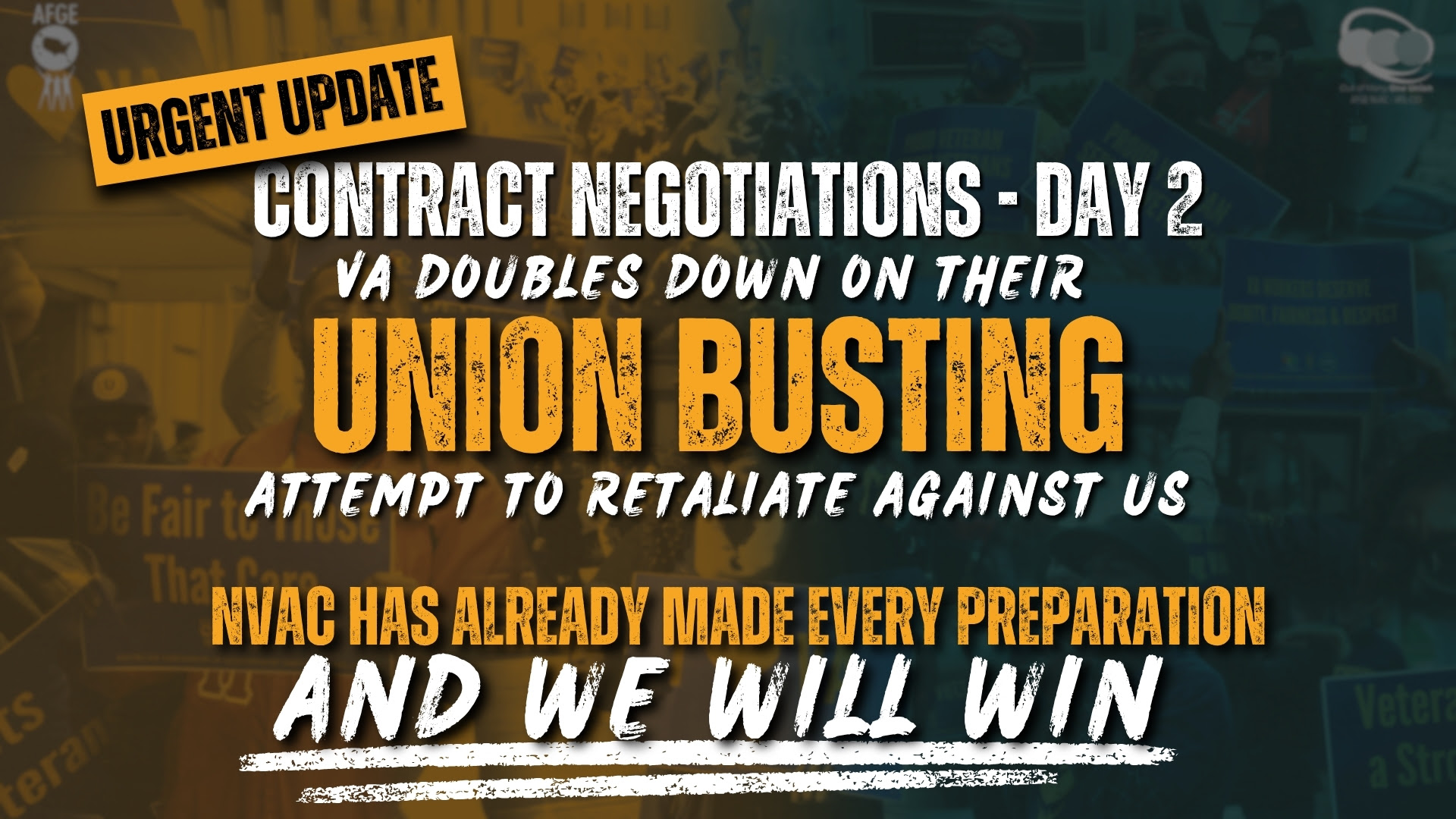
Let us start with the part that matters most: AFGE Local 1224 is not going anywhere. What follows is hard news, and our members deserve to hear it straight rather than through the rumor mill. But nothing in it changes who we are or what we do for you. The National VA Council, known as NVAC, is the AFGE council that negotiates the Master Agreement on behalf of VA employees nationwide. NVAC has reported that the VA told its negotiators the agency intends to stop recognizing VA collective bargaining rights for most of the workforce beginning August 8.
NVAC President MJ Burke shared that update with local leaders after the second day of contract negotiations, following through on a promise made at the Council's Town Hall on Tuesday, July 14 to keep locals current as bargaining unfolds. The Master Agreement is negotiated nationally, on behalf of every VA local, and what follows is the Council's account of what happened at the table, passed along to our members so that no one has to hear it secondhand.
What NVAC reported from day 2 at the bargaining table
According to the Council's update, NVAC negotiators felt they had been misled during bargaining and put a direct question to the agency: would the VA continue to recognize the Master Agreement during the renegotiation process?
The VA left the room to caucus. When its negotiators returned, per NVAC's account, they answered that as of August 8 the agency would recognize VA collective bargaining rights only for employees it considers "exempt," a category it limited to three job titles:
- Police Officer
- Firefighter
- Security Guard
Every other VA employee, meaning everyone outside those three job titles, would fall into what the agency called "non-exempt." NVAC further reports that the VA claimed non-exempt employees will no longer be entitled to official time as of that same date.
What official time is, and where the law puts it
Official time is not a courtesy the agency extends. It is a creature of statute: 5 U.S.C. § 7131, a section of federal labor law titled, plainly, "Official time." It is the paid time a union representative spends representing employees, rather than doing that work on leave or on their own hours. The law guarantees official time for negotiating the contract itself, but most day-to-day representation runs on the kind the agency and the union negotiate, which exists because the Master Agreement says it does. That is the thread the VA is pulling: stop recognizing the contract, and the agency will argue that official time goes with it.
Strip it away and you have not trimmed a benefit. You have made it harder for a worker in trouble to get anyone to stand with them. Our know your rights page explains official time, Weingarten rights, and the grievance process in plain language.
Why NVAC says the attack on VA collective bargaining rights is unlawful
Burke's message to local leaders left no room for interpretation on this point: the VA's plan to terminate your collective bargaining rights is unlawful, and NVAC's legal team is already at work on it.
There is real ground under that position. VA collective bargaining rights are not a courtesy the agency extends and can withdraw whenever they become inconvenient. They are written into federal statute, and the machinery for enforcing them exists precisely because agencies have tried this before. An agency announcing a deadline does not by itself erase a right that Congress put in law.
That ground is not abstract. This is the same Master Agreement a federal judge ordered the VA to reinstate on March 13, after Secretary Doug Collins terminated it in August 2025, and in May a unanimous First Circuit panel refused the VA's request to put that order on hold. NVAC is not opening a new fight here. It is defending a court order it already holds.
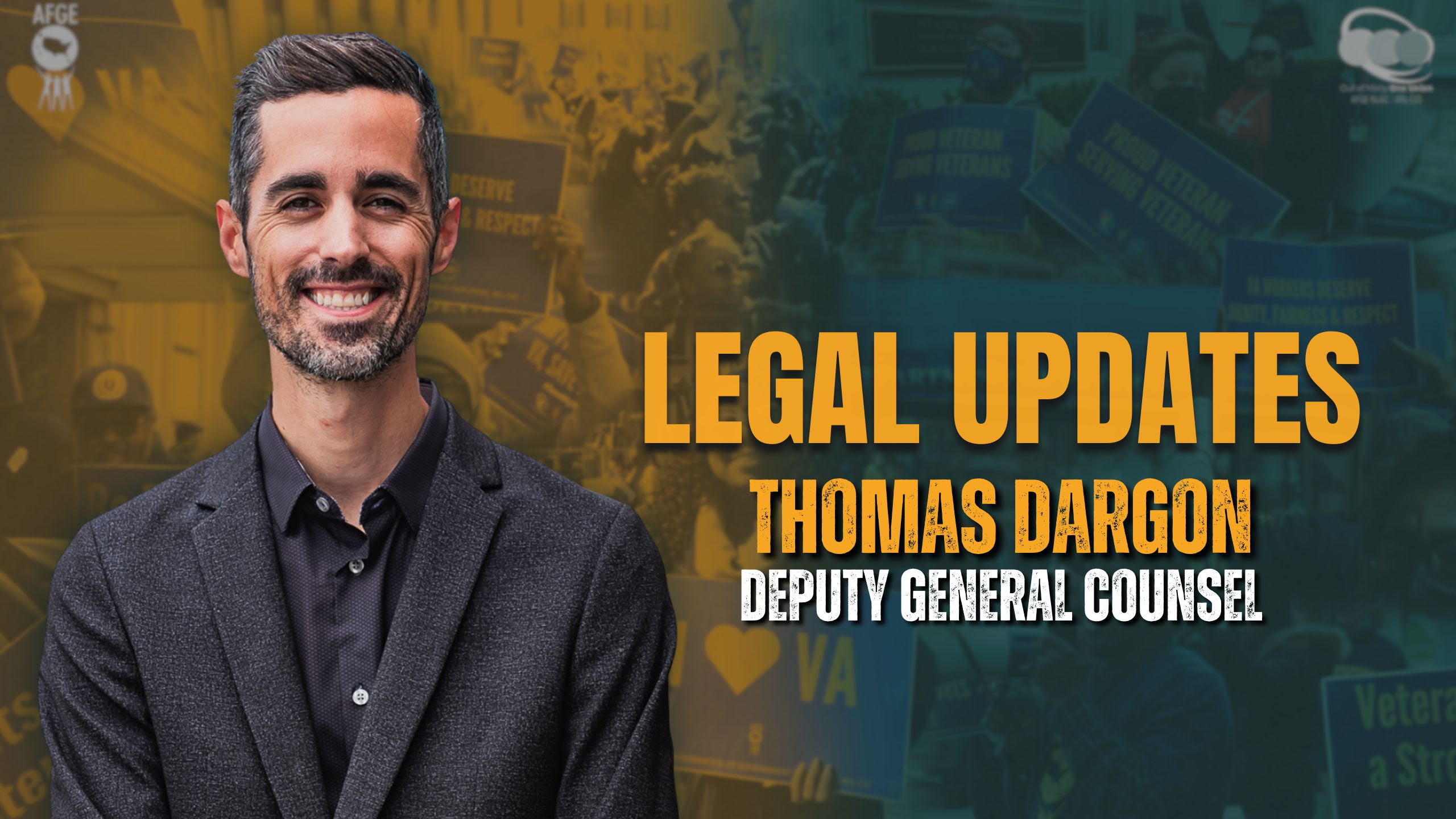
NVAC Deputy General Counsel Thomas Dargon walked local leaders through the legal landscape during Tuesday night's Town Hall. The full Legal Updates presentation is available, and we would encourage every member who wants the detail behind the headline to read it.
Why this Council exists
"NVAC has long provided a voice for VA employees who see problems on the front lines. When workers can raise concerns without fear of retaliation, the agency functions better and the veteran benefits." — NVAC President MJ Burke
6 urgent steps NVAC is taking now
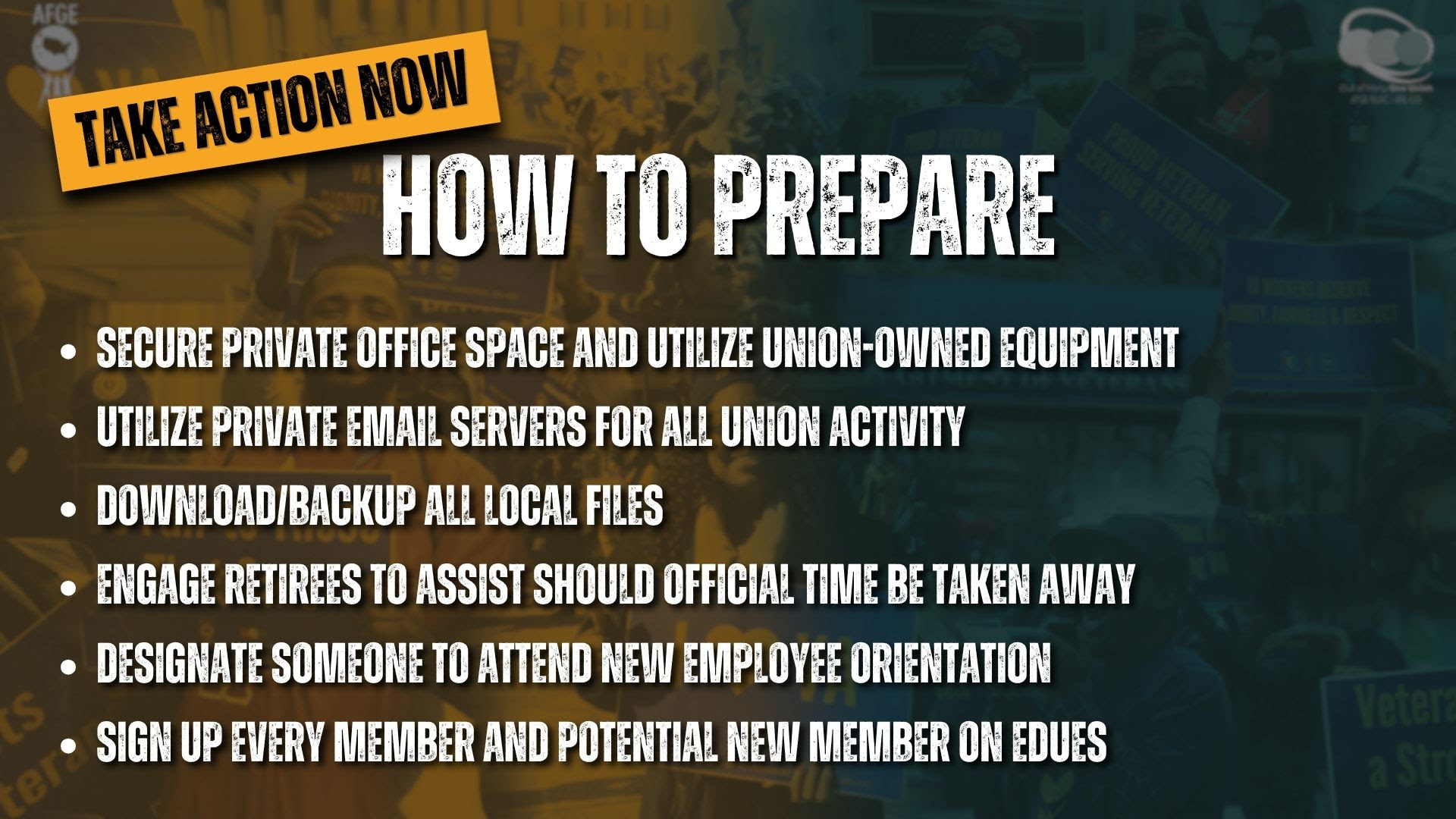
The Council did not simply deliver bad news. It delivered a plan, and its message to members is that it has already made every preparation. Alongside the update, NVAC directed locals to take specific steps. These six steps to defend VA collective bargaining rights are aimed at local leadership rather than at individual members, which is exactly why they should reassure you. They are the clearest evidence available that your union saw this coming and is already moving.
- Secure private office space and use union-owned equipment. If the agency withdraws the space and tools it currently provides, the work of representing members continues on the union's own footing.
- Move all union activity to private email servers. Union business runs on union systems, independent of agency accounts the VA controls.
- Download and back up all local files. Grievance records, case histories, and member documentation stay in the union's hands rather than behind a door the agency can lock.
- Engage retirees to assist should official time be taken away. NVAC is asking locals to bring retired members into the work if the agency strips official time from the people currently doing it.
- Designate someone to attend new employee orientation. Every new hire still deserves to meet their union and learn what the contract does for them.
- Sign up every member and potential new member on eDues. The administration has already shown it is willing to stop taking union dues out of federal paychecks, and AFGE warns that when dues stop, membership and the benefits attached to it stop with them. eDues moves dues to a card or bank draft paid straight to the union, so no payroll office decides who stays a member.
Read that list again and notice what it actually says. Every item assumes the same thing: that this union keeps operating. Not one of those preparations is a wind-down. They are the preparations of an organization that intends to defend VA collective bargaining rights and still be standing on August 9, and every day after.
Local 1224 is not going anywhere
This Local is not closing. Your representation is not ending. If the VA follows through on what NVAC reports it said at the table, the conditions we work under will get harder, and we are not going to pretend otherwise. But Local 1224 will keep showing up for the people who work across our Las Vegas facilities, keep answering the phone, keep walking into meetings beside members who need someone in their corner, and keep fighting every unlawful action for exactly as long as it takes.
This is not the first time VA collective bargaining rights have come under attack. Federal workers have already watched an executive order strip due process protections from thousands of civil servants, and this workforce is still here. What has never changed is the arithmetic: a union is not an office, a budget line, or an allotment of official time. A union is its members. The agency cannot vote us out of existence, and it cannot legislate away the fact that we work here, we know what happens where we work, and we look out for each other.
Which is why this next part matters more than it ever has. Whatever protection any of us has in the months ahead comes from being together. A workforce that is organized, that knows its rights, and that speaks with one voice is a workforce that is very difficult to push around. A workforce that scatters is not. It has never been more important to stand together than it is right now.
Solidarity is the strategy
NVAC's legal team will defend VA collective bargaining rights in federal court, where that fight is already underway. But the strongest card any union holds has never been a filing. It is the number of people standing behind it. If you have been meaning to sign up, to update your contact information, or to come to a meeting, this is the moment.
What members can do before August 8
The Council's six steps belong to leadership. These belong to you, and together they are how VA collective bargaining rights get defended on the ground rather than only in a hearing room:
- Get on eDues. This is the single most useful thing a member can do right now. The administration has already shown it is willing to stop taking union dues out of federal paychecks, and AFGE's warning about what follows is blunt: when management stops withholding your dues, you lose your union membership and the benefits that come with it. eDues takes that lever out of their hands. Your dues go straight to the union by credit card, debit card, or bank draft, so no payroll decision can end your membership. Sign up at joinafge.org: select your agency, choose Local 1224, and fill out the one-page form. AFGE asks that you access eDues only on personal equipment during non-duty time.
- Give the Local your personal contact information. A personal email address and a cell number, not your VA account. This is about more than losing access if the agency restricts our systems. Management can filter or block union messages sent over VA email, which means we cannot count on reaching you there at the moment it matters most. The safer practice is to keep union activity off VA network assets altogether, and a personal email and phone number are what make that possible.
- Keep personal copies of your own records. Your appraisals, your leave records, your award documentation, anything you would need if you had to prove what happened. Keep them somewhere that belongs to you.
NVAC has said additional information will be distributed in the coming days, and Local 1224 will pass along what we receive as we receive it. If you have questions in the meantime, contact the Local. That is what the office is for, and it is still open.
The VA may believe that a date on a calendar can end VA collective bargaining rights across our facilities. August 8 is going to come and go, and the people who serve veterans in Las Vegas will still be here, still doing the work, and still union. Stay strong, stay focused, and stay together.
This report is adapted from an update issued to local leaders by AFGE National VA Council President MJ Burke following day 2 of Master Agreement negotiations. All descriptions of the negotiations are NVAC's account as reported to locals. Graphics courtesy of NVAC.